Day 1 of Jarela
Cross-posted from my development journal in the Jarela repo . The project was called langGUI at the time; I rebranded it to Jarela on day 3.
I’ve been recently playing with openclaw. I was so into the capability and the integrations — all those tools, all those connectors — that I kept piling things on. But in reality I only need a handful of them. It’s too complex to my liking.
So I thought: maybe I can build a lightweight LangGraph GUI, multiple agents for different tasks, each with its own instructions and its own model. And here we go — langGUI, my small project to replace my openclaw setup.
The mental model is dead simple:
- Agents are recipes (model + system prompt + tools).
- Threads are conversations.
- The runtime is LangGraph with a SQLite checkpoint so I can close the tab and come back later.
Everything lives under ~/.langgui on the local box. No cloud, no
telemetry, no “sign in with X” — just me on my laptop talking to whichever
model is best for the task.
What I got working
Day 1: 31 commits. Not pretty, not cohesive — this is the “throw the walls up and check they hold” day.
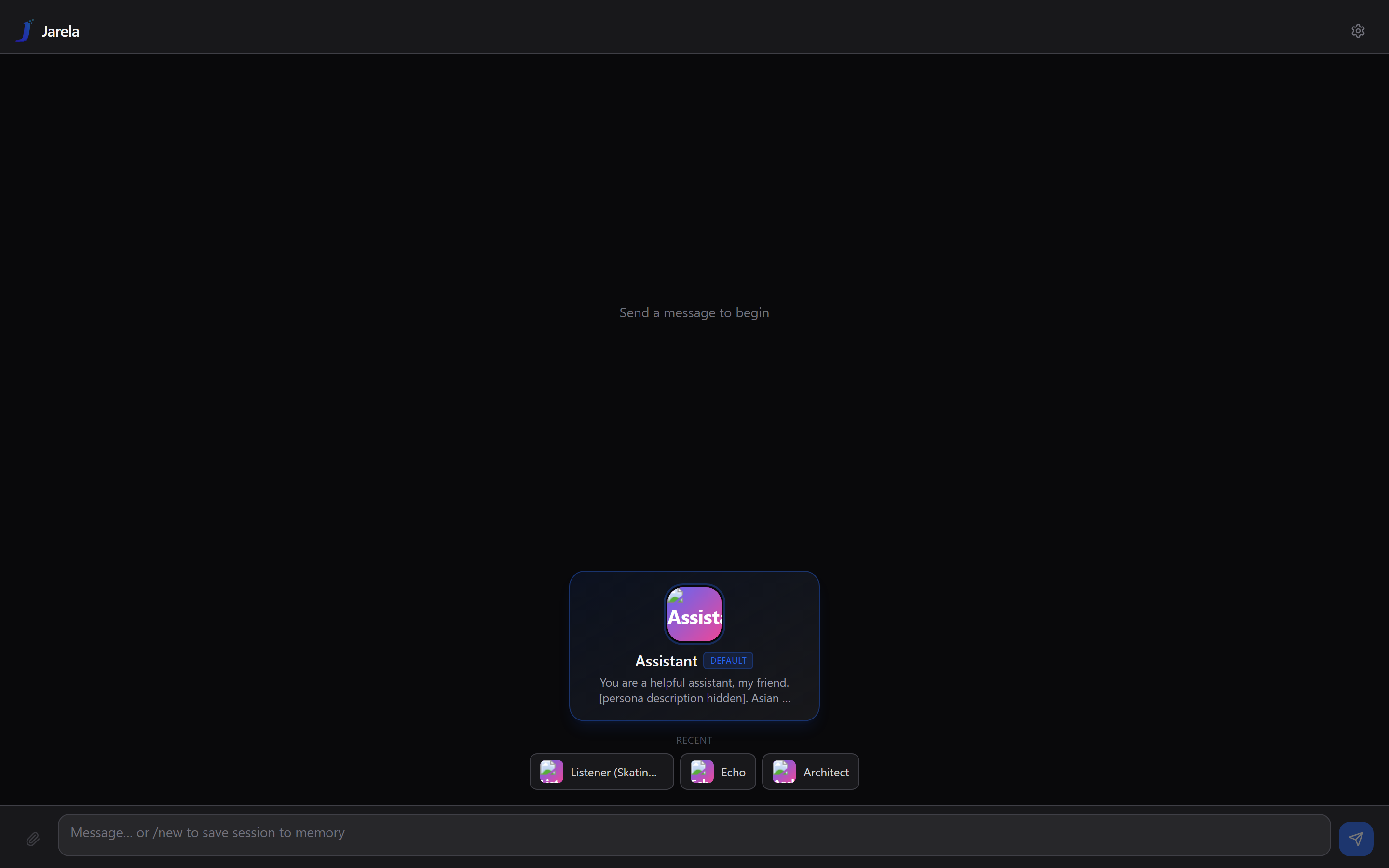
The core loop landed first: Next.js App Router + a LangGraph agent runtime + a SQLite checkpointer. Then I bolted on the obvious chrome: a chat view, an agent selector, a message bubble that renders markdown, streaming via WebSocket — and a fallback over SSE, because mobile drops the WS the moment the screen sleeps.
A few things I knew I’d want from day one:
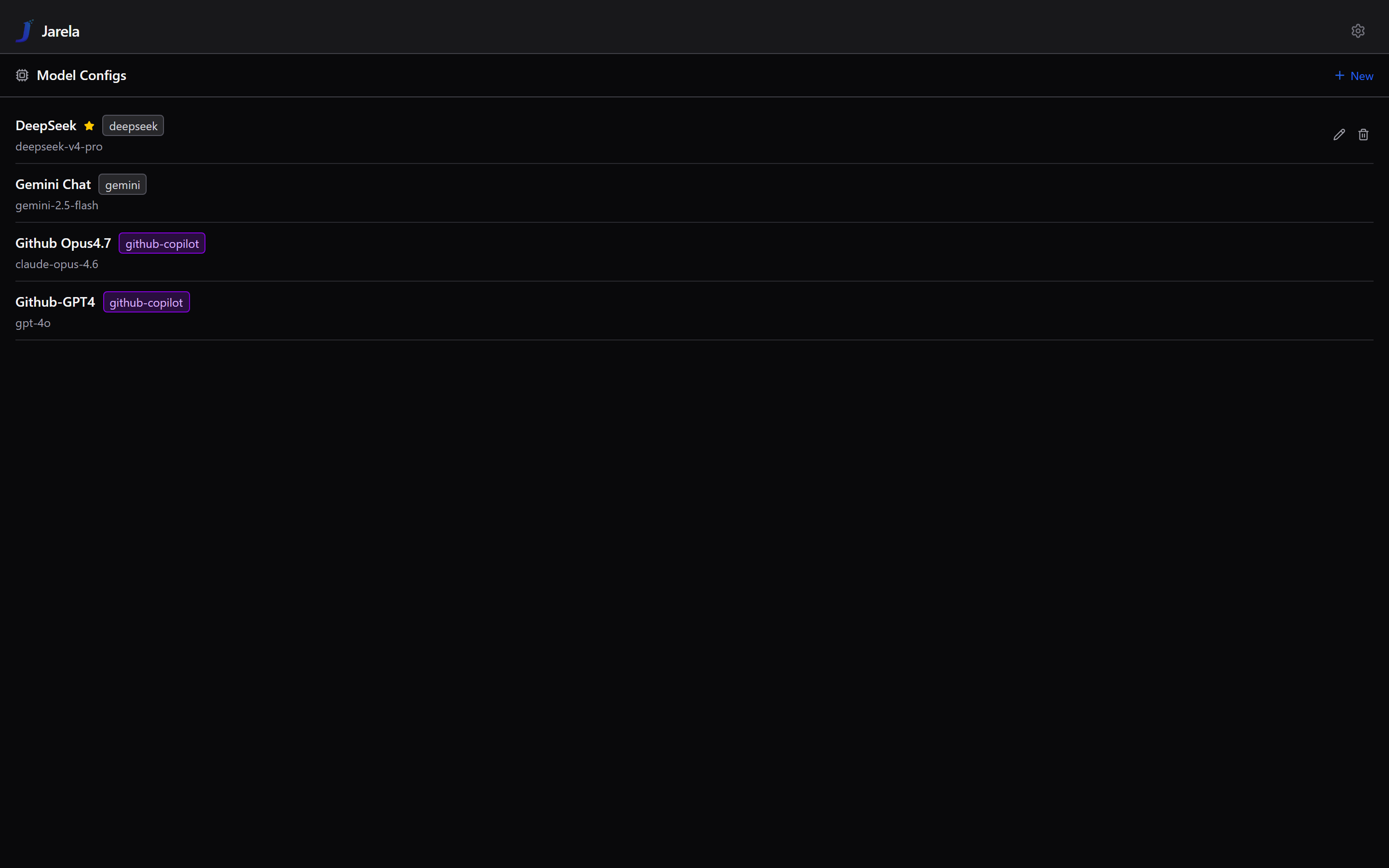
Multiple providers, one agent shape
Anthropic, OpenAI, Gemini, GitHub Copilot, DeepSeek — agents just pick
a provider + model pair. Most of the day’s “Copilot fix” commits were
me untangling GitHub’s three different auth flavors:
- OAuth device-flow tokens (what VS Code Copilot uses internally),
- Personal access tokens (PATs),
- GitHub Models API tokens (a different surface entirely).
They look like one product. They are not one product. The catalog endpoint behaves differently for each, the chat endpoint behaves differently for each, and the only way I got it stable was to route PATs explicitly to the Models API and reserve the Copilot endpoints for device-flow tokens.
Background work that wakes itself up
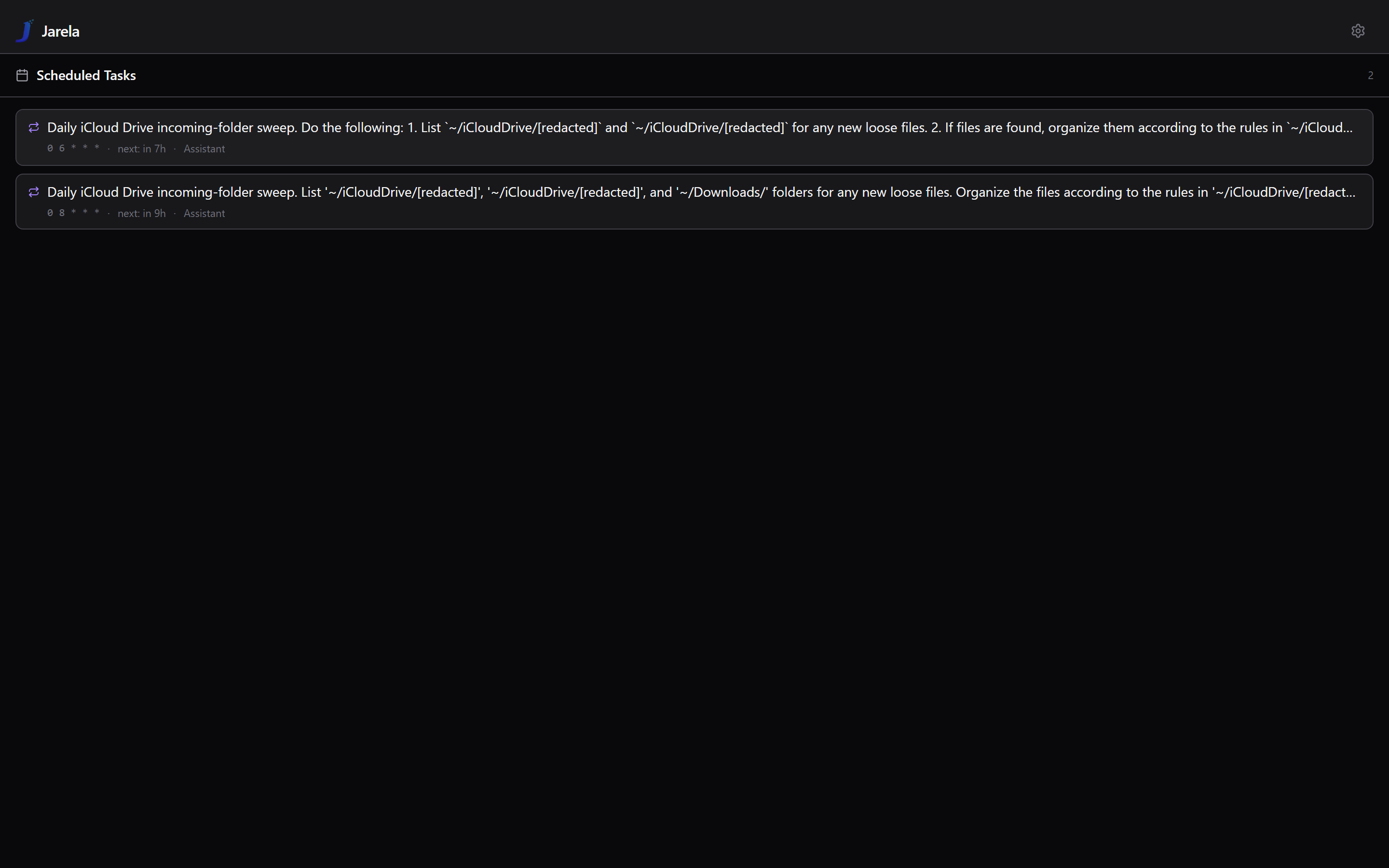
A scheduler that wakes on SSE subscribe so a cron-driven agent can ping me when something happens. Teams-style in-app toasts for the result, click-to-jump straight to the thread that emitted it.
Don’t lose what’s in flight
Three small details that matter more than they sound:
- Auto-scroll only when content actually grows (not on every re-render).
- A message queue so anything I type during streaming gets drained as part of the same turn, not silently dropped.
- A streaming bubble that survives the
doneevent so the layout doesn’t jump when the agent’s last token lands.
Identity over Tailscale
Wired Tailscale identity passthrough on both the HTTP middleware and the WebSocket upgrade. When I open this from my phone over the tailnet, the server already knows it’s me — no login screen, no shared password. Loopback gets a free pass for local dev.
Auto-start on Windows
A scheduled-task installer so the box boots, logs in, and the app is already there waiting. The whole point of this is to be ambient — if I have to remember to start it, I won’t use it.
What I learned
A few things I want to remember:
- Streaming is the easy part. Reconnection is the hard part. I had the happy path live in under an hour. I spent the rest of the day on the cases where the socket dies mid-token: mobile Safari throttling, screen sleeps, tab backgrounding, Tailscale path renegotiation.
- Scheduler + SSE + Next.js’s hot-reload is a quiet trap. I lost
an hour to the scheduler getting collected and re-instantiated
because a module reload created a second instance. Pin it to
globalThisand move on. - GitHub Copilot’s API surface is not one API. Device-flow tokens, PATs, and the Models registry are three doors that look like one. Plan for that.
A few rough edges I left for tomorrow-me: the early Copilot commits
have plain English subject lines (“Fix this”, “Handle that”) — no
type(scope): prefix. I hadn’t fully committed to Conventional Commits
yet on day 1. Past-me, learn to type a colon.
That’s enough for a day. Tomorrow: tools — the file toolkit, the WhatsApp bridge, and a lot of “this is what should have been on day 1” fixes to the chat experience.
What’s actually in the state dir
It’s worth being honest about what “day 1” actually means — code
landing ≠ working integration. Here’s what’s in ~/.langgui at the
end of the day:
4 model providers configured. Gemini (gemini-2.5-flash),
DeepSeek (deepseek-v4-pro, set as default), GitHub Copilot fronting
GPT-4o, and GitHub Copilot fronting Claude Opus 4.6. No Anthropic
or OpenAI direct — Copilot’s already paid for, so it fronts both.
3 agents created. A default Assistant with the kitchen-sink tool
list on GPT-4o; an Echo (“Innovator-Dreamer” persona) for
brainstorming on GPT-4o with a tight 5-message history window; and an
Architect (“Senior Architect” persona) on DeepSeek with the heavy
tools — shell_exec, propose_config_change — so I can let it drive
the box.
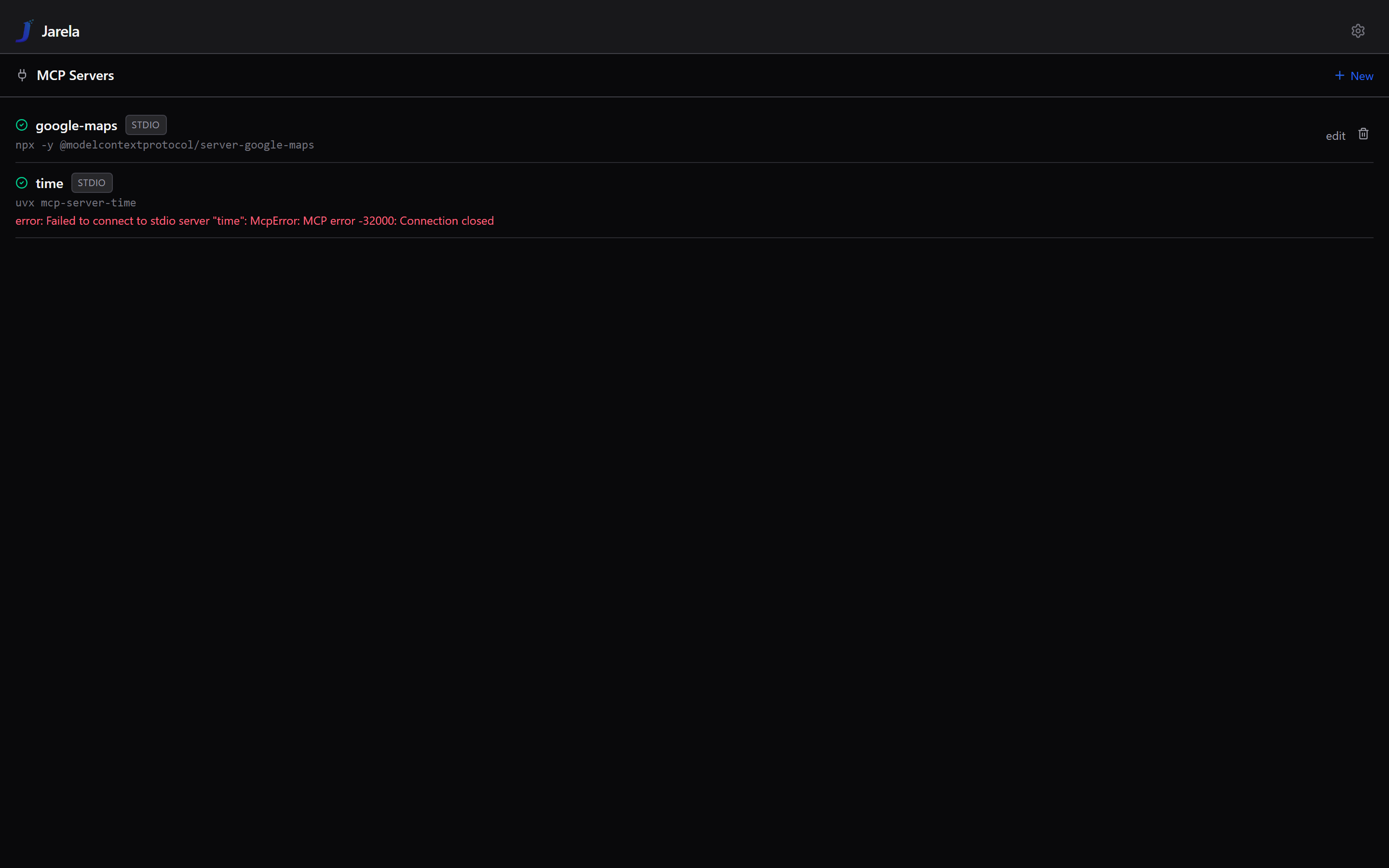
2 MCP servers, 1 working.
google-mapsvia the official@modelcontextprotocol/server-google-mapsnpx package, with the API key piped throughenv. ✅ Connected.timeviauvx mcp-server-time. ❌ Failing on startup withMCP error -32000: Connection closed. Almost certainly auvxPATH issue when the app is launched from a scheduled task. Not fixed today.
Identity / access. Tailscale identity passthrough is wired and my Google identity is on the access whitelist. From the phone over the tailnet, the server already knows it’s me.
GitHub Copilot OAuth completed end-to-end. Worth re-stating:
the ghu_ user-OAuth token (what you get from the device flow) is
different from a ghp_ PAT, which is different from a
Models API token. Three different doors that all look like the
same product.
If you want to follow along, the repo is open at github.com/andrew-ge-wu/jarela . It’s a personal project — no roadmap, no SLA, no warranty. Just notes from the workshop.